Wednesday, June 9, 2010

Yo-Yo Dieting Effects

Been awhile since I’ve blogged. Was out of town last week and I feel like I need a vacation this week being on vacation last week.

One thing that is all too common when it comes to dieting is the yo yo effects of it. Meaning, you lose weight, then you gain it back, then lose it again, then gain it back again.


We’ve probably done it ourselves, know people personally that have done it, and even seen millionaire celebrities like Kristie Alley and Oprah Winfrey go through this cycle over the years. I even talked about the Biggest Loser contestants that have put back on weight after the show was over.

There’s some studies that show that:

By some estimates, more than 80 percent of people who have lost weight regain all of it, or more, after two years. Researchers at the University of California at Los Angeles analyzed 31 long-term diet studies and found that about two-thirds of dieters regained more weight within four or five years than they initially lost.


The rest of the article is a decent read even though I don’t agree with some pieces of it.

I think one of the causes of yo yo dieting is the fact that a person sets a weight that they want to reach and mark that as their goal.

Which means that like a lot of things in life, when we reach that goal we think “ahhhh, I did it!” And then stop….

If you’re goal is to run a marathon, you train for it, you run it, but when you reach the finish line, do you keep running past it or do you stop? Your goal was to run in it, you finished, you reached your goal, you’re done (at least until you set your next goal).

The thing with fat loss though is that you can’t do that. You have to set that benchmark, and then make sure that you stay right around that benchmark in order for it to stick.

But let’s back up to the point before reaching the “goal weight.”

A lot of times you get on a weight loss kick, start losing weight, lose weight consistently, and then find yourself at a plateau for a couple of weeks. This is where people tend to fall off.

There are those that will be patient, make adjustments, and push through the plateau. There are others that get frustrated, and give up. They go back to their old style of eating, and then put the pounds back on, thus, just completed a round of yo-yo dieting.

When you hit a plateau, you need to be patient. Take some time away from your regular eating and exercise habits for 2-3 days and just relax. Then get right back to what you were doing. Sometimes your body needs this kind of shake up to get you back on the fat loss track.

So you push through that plateau, and you reach your goal weight. Great! Pizza for a week!!! Well, not quite. This can be the hardest part of the whole weight loss process: maintaining what you just did.

As mentioned, this is where you can either go back to your old habits, which will result in gaining weight, or you stay on the mark, watch what you eat, and keep an eye on that scale.

I like to tell people to follow the six pound rule: Keep weighing yourself once a week (and only once a week), keep your food and exercise in line, and keep your weight within six pounds of your goal weight.

If you keep your weight within six pounds of where you want to be, that’s very manageable and you can very easily get back to your goal weight fairly quickly if you need to (at the same time, six pounds isn’t that much to the point where others are going to notice or that all of a sudden those pants won’t fit but, from a psychological perspective, just knowing that you’re at your goal weight for a special event can do wonders for your mind set).

The bottom line is, have a goal weight in mind but, remember that MAIN goal is to keep it off!

www.leanbodytraining.com
Facebook

Wednesday, June 2, 2010

30 MInute Hotel Workout - 6/1/10

I'm out of town this week but put together a nice 30 Minute Hotel Workout that you can do when you get to that summer vacation in the next couple of months.

This is more of an advanced workout.


Workout Details:

2 exercises back to back:

1. Do 10 repetitions of Sumo Squats on your Toes then with no rest,
2. Do 10 repetitions of Pushups, then again with no rest,
3. Go back and do 10 more repetitions of Sumo Squats on your Toes followed by
4. Another 10 repetitions of Pushups.
5. Continue going back and forth between 10 Sumo Squats on your Toes and 10 Pushups with no rest in between exercises for 10 straight minutes.

Then rest for about 4-5 minutes.

Then another 2 exercises back to back:

1. Do 10 repetitions of Burpees then with no rest,
2. Do 10 repetitions (on each side) of Alternating Y-Forward Lunges, then again with no rest,
3. Go back and do 10 more repetitions of Burpees followed by
4. Another 10 repetitions (on each side) of a Alternating Y-Forward Lunges.
5. Continue going back and forth between 10 Burpees and 10 Alternating Y-Forward Lunges (on each side) with no rest in between exercises for 10 straight minutes.

Then you're done.

If you want to learn more about the 30 Minute Workout Program, click below:

30 Minute At Home Workout


www.leanbodytraining.com
Facebook

Friday, May 28, 2010

Suburban Fat

Ever wonder whether suburban life is making you fat?

I feel fortunate with living in the area of Wyandotte Michigan where I have a lot of things within walking distance of my home.

Within about a ten minute walking radius, I have a convenience store, over a dozen different eating establishments, clothing stores, a couple of schools, a couple of playgrounds with baseball fields, volleyball nets set up, three or four churches, a golf course, and a river to drop my kayak in (don’t really have a grocery store but, now that I think about it, there’s one that I could walk to in about 25 minutes if I wanted to).

Unfortunately, I think my situation is more the exception rather than the rule when it comes to suburban life nowadays.

There’s some new studies out that are talking about how living the suburban life is contributing to the fat that we’re putting on in the United States.

Sprawling suburbs make it harder for people to get around without a car may help fuel obesity: Americans who live in the most sprawling counties tend to weigh 6 more pounds than their counterparts in the most compact areas.


This was something that I know I see all the time in new suburbs:

“Look at many new suburbs — there are not any sidewalks at all. ... The result is we just don’t walk,”


A few years ago when I was looking at moving out of the house I had at the time and looking at new ones, as strange as it may seem, if I went into a neighborhood and saw that there weren’t any sidewalks, it really gave me a negative first impression that extended into what I thought of the inside of the house(s) that I was looking at.

When you read a little further into the article, there is a difference between those that live in sprawling suburbs and those that live in more compact areas but, it’s really not a huge difference:

In the 25 most compact counties, 22.8 percent of adults had high blood pressure and 19.2 percent were obese. In the 25 most sprawling counties, those rates were 25.3 percent and 21.2 percent, respectively.


At the same time though, if you’ve ever spent time in a more compact area, your legs most definitely tell you that you’re moving more than you are when you’re back at home in the burbs.

This was probably the most startling stat that was mentioned in the article:

In Europe, people make 33 percent of their trips by foot or bicycle, compared with just 9.4 percent of Americans’ trips.


When I was in the south of France a few years ago, it was great to be able to walk EVERYWHERE. Take a nice walk in the morning to get coffee and a bagel, walk to a nice cafĂ© in the afternoon for lunch, walk somewhere for dinner, to the “grocery store” for whatever (and most of it fresh), etc. No need for a car whatsoever.

I had a thought a few years ago that it would be great to see new neighborhoods designed almost like very small cities.

The center of the neighborhood would be small stores and shops and some restaurants and pubs that are within a 15-20 minute walk from the furthest house built. Then within the neighborhood you could have a school somewhere on the outskirts of it, and a few different denominational churches in there as well.

Everything would be within walking distance for everyone in the neighborhood. People would be getting their exercise, possibly have stronger relationships with those in the small community, drinking establishments would be within walking distance thus reducing the number of drunk driving incidences.

I know I’m probably dreaming on all of that but, I think it would be a great little simple lifestyle to live with the bonus being that we’d be taking some steps in reducing our suburban fat.

www.leanbodytraining.com
Facebook

Wednesday, May 26, 2010

30 Minute At Home Workout - 5/25/10

Here's today's 30 Minute At Home Workout:

This is more of an intermediate level workout.


2 exercises back to back:

1. Do 10 repetitions of Bodyweight Squats then with no rest,
2. Do 10 repetitions of Kneeling Pushups, then again with no rest,
3. Go back and do 10 more repetitions of Bodyweight Squats followed by
4. Another 10 repetitions of Kneeling Pushups.
5. Continue going back and forth between 10 Bodyweight Squats and 10 Kneeling Pushups with no rest in between exercises for 10 straight minutes.

Then rest for about 4-5 minutes.

Then another 2 exercises back to back:

1. Do 10 repetitions (on each side) of Knee Taps then with no rest,
2. Do 10 repetitions (on each side) of a Stationary Lunge, then again with no rest,
3. Go back and do 10 more repetitions (on each side) of Knee Taps followed by
4. Another 10 repetitions (on each side) of a Stationary Lunge.
5. Continue going back and forth between 10 Knee Taps and 10 Stationary Lunges (on each side) with no rest in between exercises for 10 straight minutes.

Then you're done.

If you want to learn more about the 30 Minute Workout Program, click below:

30 Minute At Home Workout

www.leanbodytraining.com
Facebook

Tuesday, May 25, 2010

The Best Diet Plan

People are always searching for the best diet plan out there.

But here’s a not so secret: they can all be the best diet plan for you.

I’ve talked about how my preferred way of eating is sticking with meats, veggies, fruits, nuts and oils and basically avoiding dairy, whole grains, beans, etc. For the most part, I only eat those foods, twice a day, and eat until I’m full. No counting calories, no measuring, just eat those foods until I don’t feel like eating anymore (although I do tend to be a little more careful with the serving sizes of the nuts and oils since those are higher in calories then the rest). There’s a few other things on the “do” and “don’t” list that I have but for the most part, that’s it.

It’s a simple plan, and makes shopping fairly easy.

But the question is, why do I REALLY like this eating plan?

I tend to always argue that it’s because it’s the way humans have eaten for millions of years and since we’ve survived this long, there must be something to it.

But I think it goes even deeper than that. I tend to gravitate to this style of eating because I’ve always been fascinated with evolution. In other words, I’ve found a style of eating that is healthy, and that I can follow based on my underlying interests. By doing that, it makes it more likely that I will always stick to it.

When I look at other people and the way they eat, those that are successful at weight loss, tend to eat foods in a way that conforms to an underlying interest or lifestyle.

In other words, yes it’s true that in order to start living a healthy lifestyle, you need to make some changes. But, at the same time, that doesn’t mean that you have to make a complete change and throw out everything that you’ve enjoyed eating your entire life.

Don’t like meat or fish? Then don’t eat it.

Do you like to have that morning bagel with your coffee? Then eat it.

The absolute bottom line when it comes to fat loss is: Eat the things that you enjoy, just eat less of it.

There’s a million diets out there that people can follow.


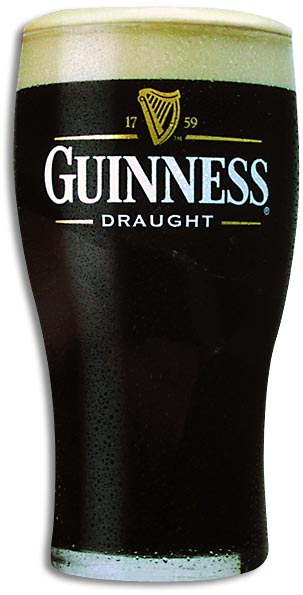
I read one article awhile back where a guy ate his fruits, veggies, lean meats, oatmeal, etc., during the day, but every night before he went to bed, he had a pint of Guinness. He loved Guinness and didn’t want to give it up. So he changed some of his other eating habits, started exercising, had his pint of Guinness every night, and ended up losing a significant amount of weight.

I had also read another article a couple of years ago by a fitness professional who was telling a story about his father’s approach to his own weight management. He asked his dad how he was able to maintain his weight within ten pounds his whole life. His dad simply said “I buckle my belt in the same hole all the time. When it gets too tight, I eat less.”

Which is the simplest take home to fat loss: eat less.

The best diet plan for a healthy lifestyle is the one that you gravitate the most towards AND can stick to it 90% of the time. Sure, you’ll have to make some changes, even some small sacrifices. But it doesn’t mean giving up everything.

So the next time you’re out searching for the best diet plan to follow, first sit down and think about things that you are interested in (food and everything else for that matter), and chances are you can fit that into an eating plan that can work for you.

www.leanbodytraining.com
Facebook

Thursday, May 20, 2010

Bad Things About Eating Meat

For decades we’ve been told there are bad things about eating meat.

I’ve always kind of wondered why meat gets such a bad rap considering that some form of human has been eating meat for almost 3 million years. If it was so bad for you, how have we survived so long eating it?

I eat meat daily and overall my blood work has always been great. I stay away from (for the most part) the processed meats such as any lunch-meat, bacon, sausage, and hot dogs, just to name a few due to all the other additives in them that I’m not very fond of.

Which leads to an interesting meta analysis of a collection of studies that showed kind of meat being consumed is a better indicator of heart diseases risks rather than just lumping all meat as “bad.”


Specifically, that heart disease risk comes from processed meat (such as bacon, sausage, hot dogs, lunch-meat) rather than your non-processed meat such as steaks and hamburgers.

Here’s what the researchers found:

In a report that pooled data from 20 different studies from around the world, the researchers found that daily consumption of about two ounces of processed meat was associated with a 42% increased risk of heart disease and a 19% heightened chance of diabetes. By contrast, a four-ounce daily serving of red meat from beef, hamburger, pork, lamb or game wasn't linked to any increased risk of heart disease.


It’s interesting because both types of meat have “high” levels of saturated fat so it’s believed that there is

the possibility that when it comes to meat, at least, the real bad actor may be salt. Processed meats generally have about four times the amount of salt as non-processed meats.


Since I’ve pretty much dumped salt and products with sodium in them over the last couple of years, when I bite into a piece of meat that is processed, it’s amazing how instantaneous you taste that salt (and more times than not, my stomach doesn’t appreciate it either and let’s me know…).

The article also states that even though non-processed red meat didn’t increase the risk of heart disease, it didn’t lower it either. Okay fine, then the meat producers can’t go out and start making a health claim on meat now but at the same time, I think it adds a bit more evidence that non-processed meat isn’t UN-healthy for you.

The article also mentions a second study that conducted a meta analysis of other studies that that was published earlier this year that

found that intake of saturated fat wasn't linked to a statistically-significant increased risk of heart disease, stroke or cardiovascular disease.


Which then leads to the best quote I think I read all week:

"There is growing evidence that it's not which nutrient we eat, but the type of foods we eat that is important," said Harvard's Dr. Mozaffarian. "We have to get away from trying to micromanage nutrients and look at the health quality of foods."


That last sentence is key. We continue to look at things in this tiny little box and say “that’s the part that is making this whole thing unhealthy” instead of looking at the combination of things that could be resulting in an unhealthy result.

I’ll give an example. When I’m walking through the grocery store, I tend to take notice of people that have their cart pretty full with food. For the most part, 90% of the stuff in those carts is processed junk, very little fruits and vegetables, and maybe a couple of steaks and some hamburger.

It hit me as rather odd that when reading the “bad things about eating meat” studies and looking at this grocery cart full of processed foods that are loaded with sodium, sugar, trans fat, high fructose corn syrup, etc., the least unhealthiest thing in there IS the non-processed meat.

In the end, and I know I keep saying this, I like to stick with eating meats (the non-processed kinds), fruits, veggies, nuts, and oils. Nice and simple to follow and you get to stay away from the processed meat that is looking like is the true villain in the equation of the bad things about eating meat.

www.leanbodytraining.com
Facebook

Wednesday, May 19, 2010

Shake Weight Review

Ever seen that commercial for the Shake Weight or the Shake Weight for Men?


I was out last week and saw in on a TV in a restaurant I was at and I couldn't eat another bite I was laughing so hard. Here's a short (and in some ways almost obscene) video clip of it:


"Dynamic Interia"?? When I googled that term looking for an actual definition, the first page only had links talking about...The Shake Weight.

I know this goes without saying but, don't waste your money on this product.

www.leanbodytraining.com
Facebook