We always hear about portion sizes and how if at first we just cut back on the amount that we eat rather than what we eat, it would go along way in reducing our waistlines.
But, what hasn't been discussed or shown is how the portion sizes that are given to us at restaurants etc. have slowly increased over the years.
This article gives you the evidence of how much these portion sizes have increase over the last couple of decades.
There's really not much more to say after that. The proof is in the pictures.
OUT NEXT WEEK
I'm out of town next week so no blog entries. Have a good Memorial Day weekend and I'll be back in a week.
www.leanbodyfitness.com
Facebook
Friday, May 22, 2009


Thursday, May 21, 2009
Bodybuilding Image Appeal
I wrote earlier this week here about female body image and how I didn't agree that there was as much pressure on women to hold a certain body image like there has been in the past and that the incredibly skinny look of some models really isn't all that appealing to men.
This article came up that made we wonder about the opinion of women and how they viewed the abnormally muscular men that are in the bodybuilding world. Are they appealing, or not so much?
First, some things from the article. There was a bodybuilding contest among Belgian bodybuilders being held in the Netherlands and at the last minute some folks from the Anti-Doping organization showed up and the bodybuilders scattered like rats and it essentially canceled the contest.
This was pretty staggering (yet really not that shocking):
And really, you don't get to that kind of size without the help of steroids. It's just not going to happen.
But it got me thinking about the images of bodybuilders today and bodybuilders of years ago. Here's a pic of Dennis Tinerino who was big on the bodybuilding front in the 1960s:

Now look at this...thing from our current era:

Which looks is more appealing and attractive?
I would even venture that a normal guy that is wanting to put on muscle and have the lean look would view the first picture as being a more desirable goal.
But the second image just looks freaky and it looks outright unhealthy.
And that's another solid point: Physical appearance on the extremes just do not look healthy.
Ladies, correct me if I'm wrong though in my assumption that the big, skies the limit look of a freaky bodybuilder look is what you're after because I'm just not seeing where you'd find that appealing.
www.leanbodyfitness.com
Facebook
This article came up that made we wonder about the opinion of women and how they viewed the abnormally muscular men that are in the bodybuilding world. Are they appealing, or not so much?
First, some things from the article. There was a bodybuilding contest among Belgian bodybuilders being held in the Netherlands and at the last minute some folks from the Anti-Doping organization showed up and the bodybuilders scattered like rats and it essentially canceled the contest.
This was pretty staggering (yet really not that shocking):
Last year, 22 of 29 tests were positive, either for steroids or for refusing testing, a failure rate of a staggering 75 percent.
And really, you don't get to that kind of size without the help of steroids. It's just not going to happen.
But it got me thinking about the images of bodybuilders today and bodybuilders of years ago. Here's a pic of Dennis Tinerino who was big on the bodybuilding front in the 1960s:
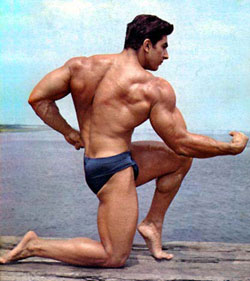
Now look at this...thing from our current era:

Which looks is more appealing and attractive?
I would even venture that a normal guy that is wanting to put on muscle and have the lean look would view the first picture as being a more desirable goal.
But the second image just looks freaky and it looks outright unhealthy.
And that's another solid point: Physical appearance on the extremes just do not look healthy.
Ladies, correct me if I'm wrong though in my assumption that the big, skies the limit look of a freaky bodybuilder look is what you're after because I'm just not seeing where you'd find that appealing.
www.leanbodyfitness.com
Wednesday, May 20, 2009
Intermittent Fasting Update
Back about a month and a half ago, I wrote a review here of a book called Eat Stop Eat that I read and an eating regiment that I followed for 4 weeks that involved fasting for 24 hours, twice a week. During that four weeks, I lost 8.5 pounds.
I took a week off from the fasting after that the last week that I fasted and ended up losing another half a pound.
A week after that, I went back to fasting twice a week for another 4 weeks. I ended up dropping another 5 pounds.
Then I stopped fasting for two weeks and during that time, I dropped another 2 pounds.
So in 11 weeks, I dropped 16 pounds. Not bad.
I also went and had my bloodwork done after the first 9 weeks to see how that looked.
The last time that I had my bloodwork check I blogged about it here.
This time around here were my results:
Total Cholesterol: 130
HDL Cholesterol (the good stuff): 59
LDL Cholesterol (the bad stuff): 65
Triglycerides: 45
Blood Glucose: 89
Blood Pressure: 108/68
Resting Pulse: 80
Everything within normal range.
So after 9 weeks of fasting, no harmful results on the issue of bloodwork.
It was a great ride trying the intermittent fasting out and I highly recommend it as a way to lose weight safely, and quickly.
I highly recommend that you buy the book here, and after you buy it, the offer is still on the table that if you e-mail me your e-receipt, I'll send you a FREE copy of my diary of what I ate and what my workouts were for the original four weeks that I followed this.
Give it a try. You won't be sorry.
www.leanbodyfitness.com
Facebook
I took a week off from the fasting after that the last week that I fasted and ended up losing another half a pound.
A week after that, I went back to fasting twice a week for another 4 weeks. I ended up dropping another 5 pounds.
Then I stopped fasting for two weeks and during that time, I dropped another 2 pounds.
So in 11 weeks, I dropped 16 pounds. Not bad.
I also went and had my bloodwork done after the first 9 weeks to see how that looked.
The last time that I had my bloodwork check I blogged about it here.
This time around here were my results:
Total Cholesterol: 130
HDL Cholesterol (the good stuff): 59
LDL Cholesterol (the bad stuff): 65
Triglycerides: 45
Blood Glucose: 89
Blood Pressure: 108/68
Resting Pulse: 80
Everything within normal range.
So after 9 weeks of fasting, no harmful results on the issue of bloodwork.
It was a great ride trying the intermittent fasting out and I highly recommend it as a way to lose weight safely, and quickly.
I highly recommend that you buy the book here, and after you buy it, the offer is still on the table that if you e-mail me your e-receipt, I'll send you a FREE copy of my diary of what I ate and what my workouts were for the original four weeks that I followed this.
Give it a try. You won't be sorry.
www.leanbodyfitness.com
Monday, May 18, 2009
Strange Poll Results on Weight
When you look at yourself in a mirror, or sit down to eat a meal, what is it that you really see? If you're active and eat well most of the time, why are you doing that? Is it because you want to lose weight and get in shape and look better, or is it because you want to lead a healthy lifestyle to ward off sickness and other ailments? Or is it a little bit of a combination of both?
I've been meaning to blog on this story for awhile but I had to read it a number of different times because I found it somewhat confusing.
It involves a poll conducted by AP and Ivillage and here are some of the findings:
I've read that paragraph a half dozen times and it still doesn't make sense to me. Half don't like the weight that they are at and a third don't like their physical condition. I guess it depends on how you're defining "physical condition" because it seems to be that if half don't like their weight, that those same people don't like their physical condition.
More from the article:
Okay fine, being overweight but continuing to exercise is going to reduce your risk of heart disease but, it would reduce it even more if the excess weight was taken off (yes, I know that might be easier said then done but, it's doable).
Now here's a quote that really bothered me:
Maybe I'm just not looking at this correctly but, if our culture puts a lot of pressure on women to look a certain way (skinny, model type), then why are two-thirds of women overweight or obese? I remember that was the common theory back 10-20 years ago (and earlier), but does it really hold today, in 2009? Beauty pageants that involved women that were so skinny if they turned sideways you probably wouldn't know they were even there, have lost a lot of popularity over the last decade to the point that they aren't even shown on the major networks anymore.
If anything, I think what people have started to realize (and the article states as much) is that getting to a point where you look like this:

Not only looks better (and even men will tell you as such), but is more healthier than looking like this:

But again, I just don't see how there's that much pressure out there anymore to even look like either of those two pictures due to the fact that two-thirds of us are not even close to being able to see our abs.
www.leanbodyfitness.com
Facebook
I've been meaning to blog on this story for awhile but I had to read it a number of different times because I found it somewhat confusing.
It involves a poll conducted by AP and Ivillage and here are some of the findings:
Half don't like their weight, even 26 percent of those whose body mass index or BMI — a measure of weight for height — is in the normal range. But just a third don't like their physical condition, even though being overweight and sedentary are big risk factors for Type 2 diabetes, heart disease and other ailments.
I've read that paragraph a half dozen times and it still doesn't make sense to me. Half don't like the weight that they are at and a third don't like their physical condition. I guess it depends on how you're defining "physical condition" because it seems to be that if half don't like their weight, that those same people don't like their physical condition.
More from the article:
"People can't see the damage that's being done inside their body," says Goldberg. "If you increase your fitness but don't lose as much weight, you still have a lower heart disease risk than someone who is obese and sedentary."
Okay fine, being overweight but continuing to exercise is going to reduce your risk of heart disease but, it would reduce it even more if the excess weight was taken off (yes, I know that might be easier said then done but, it's doable).
Now here's a quote that really bothered me:
"Someone who is fat or even overweight can be healthy if they have a balanced diet and are physically active," Kwan says. "Our culture really does put a lot of pressure on women to look a certain way," taking precedence over health measures.
Maybe I'm just not looking at this correctly but, if our culture puts a lot of pressure on women to look a certain way (skinny, model type), then why are two-thirds of women overweight or obese? I remember that was the common theory back 10-20 years ago (and earlier), but does it really hold today, in 2009? Beauty pageants that involved women that were so skinny if they turned sideways you probably wouldn't know they were even there, have lost a lot of popularity over the last decade to the point that they aren't even shown on the major networks anymore.
If anything, I think what people have started to realize (and the article states as much) is that getting to a point where you look like this:

Not only looks better (and even men will tell you as such), but is more healthier than looking like this:

But again, I just don't see how there's that much pressure out there anymore to even look like either of those two pictures due to the fact that two-thirds of us are not even close to being able to see our abs.
www.leanbodyfitness.com
Friday, May 15, 2009
Friday Workout
I took my dog to the vet the other day for her "day at the spa" and while I was waiting, I went to a park to get a workout in. Here's what I did.
I jogged around this field one time just as a little warm up. Then I did some sprints. First I would sprint just maybe 5 yards. Then walk back. Then sprint again adding another five yards onto what I sprinted before. Walked back again. Kept doing this until I was sprinting about 30 yards or so.
Then it was time to start the workout.
I got down and did a bear crawl for about 20 feet. Then I stood up and did one Pushup-Burpee Combination (meaning, I dropped down to the lower part of the burpee move, completed one pushup, then pulled my legs into my chest and jump straight into the air). Immediately after completing the jump part of the burpee, I sprinted the rest of the way to where I had finished on my last sprint in my warm up.
I then walked back to the starting point, waiting 30 seconds, and did the bear crawl again for 20 feet, and then did the Pushup-Burpee Combination twice (meaning, i dropped down, did one pushup, pulled the legs in and did a vertical jump, dropped back down into a pushup position and did another pushup, pulled the legs in and did a vertical jump), and finished with the sprint again. Walked back to the starting point, and rested 30 seconds.
I kept doing this over and over again and adding another Pushup-Burpee combination each time. My goal was to do 10 of them but, after the 8th one, I was pretty spent and decided to call it a day. Workout took about 25 minutes and it was great.
Remember efficiency in exercise. You don't need to spend hours and hours working out. A quick intense 20-30 minute workout is just as good for overall health, and even better for fat loss.
Have a good weekend.
www.leanbodyfitness.com
Facebook
I jogged around this field one time just as a little warm up. Then I did some sprints. First I would sprint just maybe 5 yards. Then walk back. Then sprint again adding another five yards onto what I sprinted before. Walked back again. Kept doing this until I was sprinting about 30 yards or so.
Then it was time to start the workout.
I got down and did a bear crawl for about 20 feet. Then I stood up and did one Pushup-Burpee Combination (meaning, I dropped down to the lower part of the burpee move, completed one pushup, then pulled my legs into my chest and jump straight into the air). Immediately after completing the jump part of the burpee, I sprinted the rest of the way to where I had finished on my last sprint in my warm up.
I then walked back to the starting point, waiting 30 seconds, and did the bear crawl again for 20 feet, and then did the Pushup-Burpee Combination twice (meaning, i dropped down, did one pushup, pulled the legs in and did a vertical jump, dropped back down into a pushup position and did another pushup, pulled the legs in and did a vertical jump), and finished with the sprint again. Walked back to the starting point, and rested 30 seconds.
I kept doing this over and over again and adding another Pushup-Burpee combination each time. My goal was to do 10 of them but, after the 8th one, I was pretty spent and decided to call it a day. Workout took about 25 minutes and it was great.
Remember efficiency in exercise. You don't need to spend hours and hours working out. A quick intense 20-30 minute workout is just as good for overall health, and even better for fat loss.
Have a good weekend.
www.leanbodyfitness.com
Thursday, May 14, 2009
Taxing Soda
I've stated in the past here that I'm not a big fan of regular soda.
But how much of an affect would there be on sales of soda if there were a tax specifically on high calorie drinks like regular soda, energy drinks, etc.?
This article talks about how that is being entertained in the conversations among lawmakers as they try to take on the healthcare issues in the United States:
How much would the tax be?:
Three cents? I think you can look at this in two different ways. It's three cent more for every 12 ounces so a normal 20-ouncer would cost an extra 5 cents. I guess if the argument is that it's going to generate $24 billion over 4 years towards changes to a health care system that is in need of changes, then it seems like a small price to pay.
But at the same time, let's not go to the extremely laughable argument like this:
I highly doubt that anyone is going to drop their 2 a day Mountain Dew addiction because the price of each one goes up 5 cents. So please, let's not try with a straight face that this is being proposed to get people healthier, it's being proposed to raise revenue for health care changes.
Want to discourage people from drinking soda with a tax? Make it a two dollar a bottle tax and then you might get some people that'll give up the habit if it's going to cost them $4 for a 20-ouncer.
It seems this approach might be better:
Get the soda machines out of the schools, stop the daily menu of high calorie pizza and burritos in the school cafeterias and create required classes in school that focus on health and nutrition. That's going to go a much longer way in truly fighting against the obesity epidemic than three cents.
www.leanbodyfitness.com
Facebook
But how much of an affect would there be on sales of soda if there were a tax specifically on high calorie drinks like regular soda, energy drinks, etc.?
This article talks about how that is being entertained in the conversations among lawmakers as they try to take on the healthcare issues in the United States:
The Center for Science in the Public Interest, a Washington-based watchdog group that pressures food companies to make healthier products, plans to propose a federal excise tax on soda, certain fruit drinks, energy drinks, sports drinks and ready-to-drink teas. It would not include most diet beverages. Excise taxes are levied on goods and manufacturers typically pass them on to consumers.
How much would the tax be?:
The Congressional Budget Office, which is providing lawmakers with cost estimates for each potential change in the health overhaul, included the option in a broad report on health-system financing in December. The office estimated that adding a tax of three cents per 12-ounce serving to these types of sweetened drinks would generate $24 billion over the next four years.
Three cents? I think you can look at this in two different ways. It's three cent more for every 12 ounces so a normal 20-ouncer would cost an extra 5 cents. I guess if the argument is that it's going to generate $24 billion over 4 years towards changes to a health care system that is in need of changes, then it seems like a small price to pay.
But at the same time, let's not go to the extremely laughable argument like this:
Proponents of the tax cite research showing that consuming sugar-sweetened drinks can lead to obesity, diabetes and other ailments. They say the tax would lower consumption, reduce health problems and save medical costs.
I highly doubt that anyone is going to drop their 2 a day Mountain Dew addiction because the price of each one goes up 5 cents. So please, let's not try with a straight face that this is being proposed to get people healthier, it's being proposed to raise revenue for health care changes.
Want to discourage people from drinking soda with a tax? Make it a two dollar a bottle tax and then you might get some people that'll give up the habit if it's going to cost them $4 for a 20-ouncer.
It seems this approach might be better:
"Taxes are not going to teach our children how to have a healthy lifestyle," said Susan Neely, president of the American Beverage Association. Instead, the association says it's backing programs that limit sugary beverage consumption in schools.
Get the soda machines out of the schools, stop the daily menu of high calorie pizza and burritos in the school cafeterias and create required classes in school that focus on health and nutrition. That's going to go a much longer way in truly fighting against the obesity epidemic than three cents.
www.leanbodyfitness.com
Wednesday, May 13, 2009
A Recommendation for Tea
I've been trying out a tea for the last couple of weeks before I go to bed and I absolutely love it.
It's a hot tea that you take before you go to bed and I tell ya, I get a great night of sleep when I take this stuff.
I can really feel it the following day with a ton of energy from having such a good night's sleep.
The tea is made from Yogi Tea and it's the Bedtime type (imagine that).
A couple of things that I want to mention though.
1. There's a warning on the box that you should NOT drink this tea while pregnant or while nursing (not sure what will happen if you do but, in order to avoid the possibility of your kid turning out to look like a Klingon, don't drink it if you are going through either of these).
2. The box also states that if you are taking MAO inhibitors or other prescription drugs, talk to your doctor before drinking this.
3. I'm always concerned about my body adapting to what we put in our body so, I wouldn't recommend taking this every night. Use it 3-4 nights a week and that should suffice.
You can pretty much find this in any grocery store and it will more than likely be in the organic section. But, if you want to save some money, you can buy it from Amazon by following the link below:
Want to make it even better? Take some melatonin along with the Bedtime Tea and you'll sleep through a meteor storm. This stuff is really cheap too:
Sweet Dreams! Thanks to Chris Standish for introducing this tea to me.
www.leanbodyfitness.com
Facebook
It's a hot tea that you take before you go to bed and I tell ya, I get a great night of sleep when I take this stuff.
I can really feel it the following day with a ton of energy from having such a good night's sleep.
The tea is made from Yogi Tea and it's the Bedtime type (imagine that).
A couple of things that I want to mention though.
1. There's a warning on the box that you should NOT drink this tea while pregnant or while nursing (not sure what will happen if you do but, in order to avoid the possibility of your kid turning out to look like a Klingon, don't drink it if you are going through either of these).
2. The box also states that if you are taking MAO inhibitors or other prescription drugs, talk to your doctor before drinking this.
3. I'm always concerned about my body adapting to what we put in our body so, I wouldn't recommend taking this every night. Use it 3-4 nights a week and that should suffice.
You can pretty much find this in any grocery store and it will more than likely be in the organic section. But, if you want to save some money, you can buy it from Amazon by following the link below:
Want to make it even better? Take some melatonin along with the Bedtime Tea and you'll sleep through a meteor storm. This stuff is really cheap too:
Sweet Dreams! Thanks to Chris Standish for introducing this tea to me.
www.leanbodyfitness.com
Tuesday, May 12, 2009
More Thoughts on Fat Report Cards
Last week I was in a meeting with some football coaches to talk about a program that I'm proposing to hold specifically for junior football players (ages 8-14) that are overweight and need to lose some weight before they can even think about putting on the pads for regular football drills.
The issue that I was dealing with the weeks before meeting when trying to determine how to present this, and get it across that the class was specifically for fat loss and not just "conditioning."
The obstacles of this are a bit steep.
1. You don't want to call the program "fat camp." The stigma involved in that would be too much for a kid that age.
2. You'd have parents that would say "So are you trying to say that my kid is fat? Are you saying that I'm a bad parent?"
3. It leads to the other extreme where people are going to think "If I put my kid on a diet at age 10, he might have a complex about eating food his entire life."
That third one was the one that bugged me because it came up in this post that I wrote last week about the fat report cards. Specifically, this comment:
I guess I don't understand why a parent is more concerned if a child UNDER-eats (when in reality it's more likely "normal" eating for the what the body is designed for) and not really all that concerned if a kid gorges himself. There's this idea that under eating is going to cause health problems but at the same time, there's no real thought that over eating is going to cause just as many health problems.
We all have seen pictures of people that are anorexic or bulimic. It's not pretty and maybe it conditions us to make sure that we don't undereat.
We might think the same thing when we see the complete opposite end of an extremely obese person and realize that we don't want to go that route either.
But then there's the "normal overweight" that still carries health risks. Those we don't worry about. When we see images of people eating, they're smiling, laughing, having a good time. People even make fun at themselves for being overweight and we don't give any thought to health issues that they are or will have.

I guess in a way I understand due to the fact two-thirds of people in the United States are overweight or obese and therefore, that is the norm and since health issues related to obesity tend to slowly creep into a person's life rather than become almost immediate, there's a little more sensitivity that needs to be taken when speaking of overweight children.
In the end I took the route of promoting the class to increase football performance with fat loss. It's not a lie. With less weight you'll be able to run faster, change directions quicker, etc. I'll see if marketing it like that works. I'll keep you posted.
www.leanbodyfitness.com
Facebook
The issue that I was dealing with the weeks before meeting when trying to determine how to present this, and get it across that the class was specifically for fat loss and not just "conditioning."
The obstacles of this are a bit steep.
1. You don't want to call the program "fat camp." The stigma involved in that would be too much for a kid that age.
2. You'd have parents that would say "So are you trying to say that my kid is fat? Are you saying that I'm a bad parent?"
3. It leads to the other extreme where people are going to think "If I put my kid on a diet at age 10, he might have a complex about eating food his entire life."
That third one was the one that bugged me because it came up in this post that I wrote last week about the fat report cards. Specifically, this comment:
A 6-year-old who learned she was at the top end of what is considered healthy for her age and height started eating significantly less, reported The New York Times.
"My 2-year-old eats more than she does,'' her mother told the newspaper.
I guess I don't understand why a parent is more concerned if a child UNDER-eats (when in reality it's more likely "normal" eating for the what the body is designed for) and not really all that concerned if a kid gorges himself. There's this idea that under eating is going to cause health problems but at the same time, there's no real thought that over eating is going to cause just as many health problems.
We all have seen pictures of people that are anorexic or bulimic. It's not pretty and maybe it conditions us to make sure that we don't undereat.
We might think the same thing when we see the complete opposite end of an extremely obese person and realize that we don't want to go that route either.
But then there's the "normal overweight" that still carries health risks. Those we don't worry about. When we see images of people eating, they're smiling, laughing, having a good time. People even make fun at themselves for being overweight and we don't give any thought to health issues that they are or will have.

I guess in a way I understand due to the fact two-thirds of people in the United States are overweight or obese and therefore, that is the norm and since health issues related to obesity tend to slowly creep into a person's life rather than become almost immediate, there's a little more sensitivity that needs to be taken when speaking of overweight children.
In the end I took the route of promoting the class to increase football performance with fat loss. It's not a lie. With less weight you'll be able to run faster, change directions quicker, etc. I'll see if marketing it like that works. I'll keep you posted.
www.leanbodyfitness.com
Friday, May 8, 2009
Importance of Health During Younger Years
Back a number of years ago when I turned 30, I told myself that I needed to start getting into some better and more consistent habits with my exercise and nutrition.
It wasn't horrible during my 20s but, I had a theory that your 30s were an important time of your life to get into those good habits or else things were going to start catching up to you after you hit the big 4-0.
Since that time, I've seen friends and acquaintances that have helped prove that theory (unfortunately).
People who didn't exercise, didn't watch what they ate really started putting on the pounds once they reached their 40s. People that I know that smoke seemed to start showing signs of aging quicker, with changes in their voice, skin starting to wrinkle, complaints of physical ailments and comments about more frequent doctor's visits. It's almost like in their mind, they lived not the best lifestyle through their 20s and 30s but didn't feel any effects of that then but now that they are in their 40s they can't comprehend why they are coming across health issues.
This article talks about a study that involved women over the age of 65 and how their overweight/obesity levels along with arthritis results in more disabilities and leads to a lower quality of life during their senior years.
And here is where it gets to the point I was making:
And guys, don't think you're off the hook and can just eat the extra leftover pizza that your wife is now going to turned down and assume you're not going to have any additional health issues if you don't watch where your waistline is going:
I don't have a tattoo. If people want them, that's fine, it's just not my thing to put on my body. When I've asked a few people why they got one, they can't really answer the question too well but the normal response that I get when I ask them "Aren't you concerned how that's going to look when you get older?" I'm told "Well who cares what it looks like then!"
The point is that we really need to start looking at how are actions and treatment of our body today is going to affect what happens to us down the road. We tend to think in the "now" and the short term. I don't know about you but I'd really rather not have to take a million medications, walk with a cane, have to put a mask on to help myself breathe, etc., as long as I possibly can.
I'm not saying that I don't think you can make adjustments to how you treat your body later in life and not get results. I think you can. But I think it be a lot less painful (and less dramatic) if you give some thought to what you are doing to your body today and if it's not good, just make a few little changes and you'll see that over time, it's going to make a big difference in how you feel 20-30 years from now.
Have a good weekend.
www.leanbodyfitness.com
Facebook
It wasn't horrible during my 20s but, I had a theory that your 30s were an important time of your life to get into those good habits or else things were going to start catching up to you after you hit the big 4-0.
Since that time, I've seen friends and acquaintances that have helped prove that theory (unfortunately).
People who didn't exercise, didn't watch what they ate really started putting on the pounds once they reached their 40s. People that I know that smoke seemed to start showing signs of aging quicker, with changes in their voice, skin starting to wrinkle, complaints of physical ailments and comments about more frequent doctor's visits. It's almost like in their mind, they lived not the best lifestyle through their 20s and 30s but didn't feel any effects of that then but now that they are in their 40s they can't comprehend why they are coming across health issues.
This article talks about a study that involved women over the age of 65 and how their overweight/obesity levels along with arthritis results in more disabilities and leads to a lower quality of life during their senior years.
"While women tend to live longer than men, this study shows that they are at greater risk of living with disability and much of the excess disability is attributable to higher rates of obesity and arthritis," Dr. Heather Whitson from Duke University Medical Center, Durham, North Carolina who presented the study, noted in a statement.
Among 5,888 men and women older than 65 years enrolled in the Cardiovascular Health Study, Whitson and her colleagues found that women suffered up to two and a half times more disabilities than men of the same age. Higher rates of obesity and arthritis among these women explained up to 48 percent of the gender gap in disability.
And here is where it gets to the point I was making:
"This is important because it suggests that women's tendency to pack on extra pounds in their child-bearing and peri-menopausal years translates into loss of independence in their old age," Whitson added. "Preventing weight gain in young to middle-aged women may decrease disability burden in later years."
And guys, don't think you're off the hook and can just eat the extra leftover pizza that your wife is now going to turned down and assume you're not going to have any additional health issues if you don't watch where your waistline is going:
Men, on the other hand, were more likely to have emphysema, heart disease, congestive heart failure, stroke, diabetes and hearing problems. They were also more likely to have trouble walking due to narrowed leg arteries.
I don't have a tattoo. If people want them, that's fine, it's just not my thing to put on my body. When I've asked a few people why they got one, they can't really answer the question too well but the normal response that I get when I ask them "Aren't you concerned how that's going to look when you get older?" I'm told "Well who cares what it looks like then!"
The point is that we really need to start looking at how are actions and treatment of our body today is going to affect what happens to us down the road. We tend to think in the "now" and the short term. I don't know about you but I'd really rather not have to take a million medications, walk with a cane, have to put a mask on to help myself breathe, etc., as long as I possibly can.
I'm not saying that I don't think you can make adjustments to how you treat your body later in life and not get results. I think you can. But I think it be a lot less painful (and less dramatic) if you give some thought to what you are doing to your body today and if it's not good, just make a few little changes and you'll see that over time, it's going to make a big difference in how you feel 20-30 years from now.
Have a good weekend.
www.leanbodyfitness.com
Thursday, May 7, 2009
Fat Report Cards
If you are a parent, what would you think of this?
You get your child's report card, look it over and see how they are doing in Math, Reading, Art, and then at the bottom you see what your child's Body Mass Index (BMI) is.
That is what is going to happen the next school year in Boston according to this article.
Kids that are in first, fourth, seventh and 10th grade will be weighed and measured and the results sent home to the parents with some explanations as to what the number means and recommend where to go from there.
I'm kind of split on this. On one hand, with the child obesity epidemic getting worse I think it's a good idea to at least give parents a heads up that their child might be running into a problem.
On the other hand, is it really going to make a difference? Will the parents take is seriously, or be offended that you're calling their son or daughter "fat", or with they just look at the number and say "whatever"?
Will it cause a possible anxiety among very young kids that could possibly now view themselves as "fat" to where they might go the other way and stop eating all together as this part of the article points out:
Although at the same time, I think the schools are sending a mixed message by reporting concern about the child's BMI but at the same time, continue selling regular sugary soft drinks and fatty goods in the school cafeteria and barely teach physical education and nutrition in classes (as reported in this article in the New York Times).
I know I'm going back and forth on this but this quote from the New York Times article kind of irked me:
She right but at the same time, I don't believe the school is doing this in order breed a bunch of skinny models, it's about reducing the number of kids from having health issues (and since she's 17 and already is insulin resistant, she's already headed in that direction).
Maybe this is headed in the right direction, but maybe not. There's a lot of misinformation out there on health and fitness and I guess my final thought is that if schools are going to do this, sending a "fat" report card home with a BMI number on it along with a briefing on what it means can probably cause more harm then good because it's only giving half the story.
Physical education and Nutrition classes need to be a staple of school curriculum starting at even the level of first grade to teach a healthy lifestyle rather than just reporting on unhealthy lifestyles.
www.leanbodyfitness.com
Facebook
You get your child's report card, look it over and see how they are doing in Math, Reading, Art, and then at the bottom you see what your child's Body Mass Index (BMI) is.
That is what is going to happen the next school year in Boston according to this article.
Kids that are in first, fourth, seventh and 10th grade will be weighed and measured and the results sent home to the parents with some explanations as to what the number means and recommend where to go from there.
I'm kind of split on this. On one hand, with the child obesity epidemic getting worse I think it's a good idea to at least give parents a heads up that their child might be running into a problem.
On the other hand, is it really going to make a difference? Will the parents take is seriously, or be offended that you're calling their son or daughter "fat", or with they just look at the number and say "whatever"?
Will it cause a possible anxiety among very young kids that could possibly now view themselves as "fat" to where they might go the other way and stop eating all together as this part of the article points out:
A 6-year-old who learned she was at the top end of what is considered healthy for her age and height started eating significantly less, reported The New York Times.
"My 2-year-old eats more than she does,'' her mother told the newspaper.
Although at the same time, I think the schools are sending a mixed message by reporting concern about the child's BMI but at the same time, continue selling regular sugary soft drinks and fatty goods in the school cafeteria and barely teach physical education and nutrition in classes (as reported in this article in the New York Times).
I know I'm going back and forth on this but this quote from the New York Times article kind of irked me:
''I don't care how big I am,'' said Holly, 17, who is insulin resistant, a condition that often precedes Type 2 diabetes. ''It's not what you look like, it's who you are.''
She right but at the same time, I don't believe the school is doing this in order breed a bunch of skinny models, it's about reducing the number of kids from having health issues (and since she's 17 and already is insulin resistant, she's already headed in that direction).
Maybe this is headed in the right direction, but maybe not. There's a lot of misinformation out there on health and fitness and I guess my final thought is that if schools are going to do this, sending a "fat" report card home with a BMI number on it along with a briefing on what it means can probably cause more harm then good because it's only giving half the story.
Physical education and Nutrition classes need to be a staple of school curriculum starting at even the level of first grade to teach a healthy lifestyle rather than just reporting on unhealthy lifestyles.
www.leanbodyfitness.com
Wednesday, May 6, 2009
Lean Muscle and Birth Control
The joke I remember hearing a long time ago is that the side effects of a woman taking oral contraceptives were things like nausea, weight gain, and mood changes. So the pill itself isn't what prevents a woman from getting pregnant, it's the side effects that make her less likely to be desirable for a man to want to have sex with her.
But this study presented another side effect of oral contraceptives: Women putting on less muscle.
That's pretty significant. But this is the start of trying to figure out why that is:
But, I found a different article talking about this same study that goes a little deeper.
Essentially, the women that were on the pill had lower levels of androgen hormones that are there to build that muscle after a workout and a higher level of cortisol that is there to breakdown muscle.
Normally, it's not a bad thing to have cortisol breakdown muscle, because the androgen hormones will come along and re-build the muscle after an intense workout that triggers those hormones to spurt off (known as protein synthesis).
It seems that the contraceptive is putting a halt to the release of those androgen hormones.
But when they dug in a little deeper, they found that it even came down to the type of oral contraceptive that was being taken:
From a trainer's perspective, this is pretty interesting as it might be a question that is necessary if you're seeing your female clients not put on the muscle that you think they should be over a period of time. It could also be a reason why a female would have minimal or even fat gain over a period of time (assuming workouts are being followed and nutrition is in check). Ladies, if this is a concern for you, you might want to talk to your doctor about it but at the same time, I think more research needs to be done to give us the reasons why it's happening.
www.leanbodyfitness.com
Facebook
But this study presented another side effect of oral contraceptives: Women putting on less muscle.
They found women who were not taking birth control pills gained 60 percent more muscle mass after a 10-week weight training program than those who were.
That's pretty significant. But this is the start of trying to figure out why that is:
And blood samples before and after the training period showed the women on the pill had lower levels of muscle-building hormones such as testosterone and far higher levels of muscle-breaking hormones such as cortisol.
But, I found a different article talking about this same study that goes a little deeper.
Essentially, the women that were on the pill had lower levels of androgen hormones that are there to build that muscle after a workout and a higher level of cortisol that is there to breakdown muscle.
Normally, it's not a bad thing to have cortisol breakdown muscle, because the androgen hormones will come along and re-build the muscle after an intense workout that triggers those hormones to spurt off (known as protein synthesis).
It seems that the contraceptive is putting a halt to the release of those androgen hormones.
But when they dug in a little deeper, they found that it even came down to the type of oral contraceptive that was being taken:
Women who took pills containing low-androgenicity progestins acquired muscle through exercise as effectively as did women not on the pill. But women whose oral contraceptives contained medium- or highly androgenic progestins attained less than a 0.5 percent gain in muscle mass over 10 weeks — a far cry from what the others achieved.
From a trainer's perspective, this is pretty interesting as it might be a question that is necessary if you're seeing your female clients not put on the muscle that you think they should be over a period of time. It could also be a reason why a female would have minimal or even fat gain over a period of time (assuming workouts are being followed and nutrition is in check). Ladies, if this is a concern for you, you might want to talk to your doctor about it but at the same time, I think more research needs to be done to give us the reasons why it's happening.
www.leanbodyfitness.com
Tuesday, May 5, 2009
Put Down That Baby Food
Just when we thought the child obesity epidemic couldn't get more bizarre, I found this article that talks about how some baby food sold in Britan have more saturated fat and sugar than junk like cookies and cheeseburgers that we're feeding out older kids.
I had to look up Farley's rusks and I'm not even sure they're available in the US. They look like animal crackers to me.

Anyway, as the article points out, be careful when buying baby food or snacks and be suspect even if it says it's "healthy." It's unfortunate that the definition of that word is up for debate nowadays.
www.leanbodyfitness.com
Facebook
Publishing results of a survey of more than 100 foods for babies and toddlers, the Children's Food Campaign said Farley's rusks were 29 percent sugar and some Cow & Gate toddler biscuits contained trans fats, which have been linked to heart disease.
I had to look up Farley's rusks and I'm not even sure they're available in the US. They look like animal crackers to me.

Anyway, as the article points out, be careful when buying baby food or snacks and be suspect even if it says it's "healthy." It's unfortunate that the definition of that word is up for debate nowadays.
www.leanbodyfitness.com
Friday, May 1, 2009
Friday 5 minute Ab Workout
It's impossible to find a health related news article this week that DOESN'T have to do with Swine Flu (and refuse to write on it but if the coverage of this gets anymore insane, you might be in for a huge rant next week..).
So here's a quick 5 minute workout you can do that I came up with that will really work those abs.
Do all three of these exercise with no rest in between. Then rest 30 seconds and complete the circuit 2 more times:
1) Side Plank - 20 seconds each side
2) Mountain Climbers - 10 on each side
3) Plank - 30 seconds
Have a good weekend.
www.leanbodyfitness.com
Facebook
So here's a quick 5 minute workout you can do that I came up with that will really work those abs.
Do all three of these exercise with no rest in between. Then rest 30 seconds and complete the circuit 2 more times:
1) Side Plank - 20 seconds each side
2) Mountain Climbers - 10 on each side
3) Plank - 30 seconds
Have a good weekend.
www.leanbodyfitness.com
Subscribe to:
Posts (Atom)