
Here's today's 30 Minute At Home Workout:
This is more of an intermediate level workout.
2 exercises back to back:
1. Do 10 repetitions of Bodyweight Squats then with no rest,
2. Do 10 repetitions of Kneeling Pushups, then again with no rest,
3. Go back and do 10 more repetitions of Bodyweight Squats followed by
4. Another 10 repetitions of Kneeling Pushups.
5. Continue going back and forth between 10 Bodyweight Squats and 10 Kneeling Pushups with no rest in between exercises for 10 straight minutes.
Then rest for about 4-5 minutes.
Then another 2 exercises back to back:
1. Do 10 repetitions (on each side) of Knee Taps then with no rest,
2. Do 10 repetitions (on each side) of a Stationary Lunge, then again with no rest,
3. Go back and do 10 more repetitions (on each side) of Knee Taps followed by
4. Another 10 repetitions (on each side) of a Stationary Lunge.
5. Continue going back and forth between 10 Knee Taps and 10 Stationary Lunges (on each side) with no rest in between exercises for 10 straight minutes.
Then you're done.
If you want to learn more about the 30 Minute Workout Program, click below:
30 Minute At Home Workout
www.leanbodytraining.com
Facebook
Wednesday, May 26, 2010


Tuesday, May 25, 2010
The Best Diet Plan
People are always searching for the best diet plan out there.
But here’s a not so secret: they can all be the best diet plan for you.
I’ve talked about how my preferred way of eating is sticking with meats, veggies, fruits, nuts and oils and basically avoiding dairy, whole grains, beans, etc. For the most part, I only eat those foods, twice a day, and eat until I’m full. No counting calories, no measuring, just eat those foods until I don’t feel like eating anymore (although I do tend to be a little more careful with the serving sizes of the nuts and oils since those are higher in calories then the rest). There’s a few other things on the “do” and “don’t” list that I have but for the most part, that’s it.
It’s a simple plan, and makes shopping fairly easy.
But the question is, why do I REALLY like this eating plan?
I tend to always argue that it’s because it’s the way humans have eaten for millions of years and since we’ve survived this long, there must be something to it.
But I think it goes even deeper than that. I tend to gravitate to this style of eating because I’ve always been fascinated with evolution. In other words, I’ve found a style of eating that is healthy, and that I can follow based on my underlying interests. By doing that, it makes it more likely that I will always stick to it.
When I look at other people and the way they eat, those that are successful at weight loss, tend to eat foods in a way that conforms to an underlying interest or lifestyle.
In other words, yes it’s true that in order to start living a healthy lifestyle, you need to make some changes. But, at the same time, that doesn’t mean that you have to make a complete change and throw out everything that you’ve enjoyed eating your entire life.
Don’t like meat or fish? Then don’t eat it.
Do you like to have that morning bagel with your coffee? Then eat it.
The absolute bottom line when it comes to fat loss is: Eat the things that you enjoy, just eat less of it.
There’s a million diets out there that people can follow.
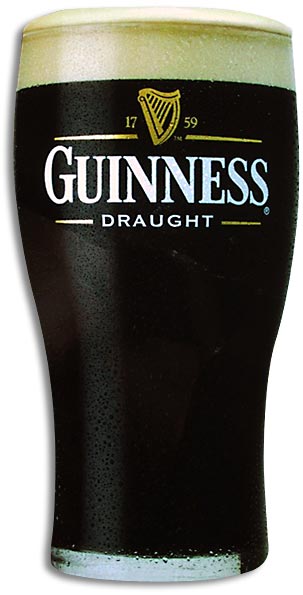
I read one article awhile back where a guy ate his fruits, veggies, lean meats, oatmeal, etc., during the day, but every night before he went to bed, he had a pint of Guinness. He loved Guinness and didn’t want to give it up. So he changed some of his other eating habits, started exercising, had his pint of Guinness every night, and ended up losing a significant amount of weight.
I had also read another article a couple of years ago by a fitness professional who was telling a story about his father’s approach to his own weight management. He asked his dad how he was able to maintain his weight within ten pounds his whole life. His dad simply said “I buckle my belt in the same hole all the time. When it gets too tight, I eat less.”
Which is the simplest take home to fat loss: eat less.
The best diet plan for a healthy lifestyle is the one that you gravitate the most towards AND can stick to it 90% of the time. Sure, you’ll have to make some changes, even some small sacrifices. But it doesn’t mean giving up everything.
So the next time you’re out searching for the best diet plan to follow, first sit down and think about things that you are interested in (food and everything else for that matter), and chances are you can fit that into an eating plan that can work for you.
www.leanbodytraining.com
Facebook
But here’s a not so secret: they can all be the best diet plan for you.
I’ve talked about how my preferred way of eating is sticking with meats, veggies, fruits, nuts and oils and basically avoiding dairy, whole grains, beans, etc. For the most part, I only eat those foods, twice a day, and eat until I’m full. No counting calories, no measuring, just eat those foods until I don’t feel like eating anymore (although I do tend to be a little more careful with the serving sizes of the nuts and oils since those are higher in calories then the rest). There’s a few other things on the “do” and “don’t” list that I have but for the most part, that’s it.
It’s a simple plan, and makes shopping fairly easy.
But the question is, why do I REALLY like this eating plan?
I tend to always argue that it’s because it’s the way humans have eaten for millions of years and since we’ve survived this long, there must be something to it.
But I think it goes even deeper than that. I tend to gravitate to this style of eating because I’ve always been fascinated with evolution. In other words, I’ve found a style of eating that is healthy, and that I can follow based on my underlying interests. By doing that, it makes it more likely that I will always stick to it.
When I look at other people and the way they eat, those that are successful at weight loss, tend to eat foods in a way that conforms to an underlying interest or lifestyle.
In other words, yes it’s true that in order to start living a healthy lifestyle, you need to make some changes. But, at the same time, that doesn’t mean that you have to make a complete change and throw out everything that you’ve enjoyed eating your entire life.
Don’t like meat or fish? Then don’t eat it.
Do you like to have that morning bagel with your coffee? Then eat it.
The absolute bottom line when it comes to fat loss is: Eat the things that you enjoy, just eat less of it.
There’s a million diets out there that people can follow.
I read one article awhile back where a guy ate his fruits, veggies, lean meats, oatmeal, etc., during the day, but every night before he went to bed, he had a pint of Guinness. He loved Guinness and didn’t want to give it up. So he changed some of his other eating habits, started exercising, had his pint of Guinness every night, and ended up losing a significant amount of weight.
I had also read another article a couple of years ago by a fitness professional who was telling a story about his father’s approach to his own weight management. He asked his dad how he was able to maintain his weight within ten pounds his whole life. His dad simply said “I buckle my belt in the same hole all the time. When it gets too tight, I eat less.”
Which is the simplest take home to fat loss: eat less.
The best diet plan for a healthy lifestyle is the one that you gravitate the most towards AND can stick to it 90% of the time. Sure, you’ll have to make some changes, even some small sacrifices. But it doesn’t mean giving up everything.
So the next time you’re out searching for the best diet plan to follow, first sit down and think about things that you are interested in (food and everything else for that matter), and chances are you can fit that into an eating plan that can work for you.
www.leanbodytraining.com
Thursday, May 20, 2010
Bad Things About Eating Meat
For decades we’ve been told there are bad things about eating meat.
I’ve always kind of wondered why meat gets such a bad rap considering that some form of human has been eating meat for almost 3 million years. If it was so bad for you, how have we survived so long eating it?
I eat meat daily and overall my blood work has always been great. I stay away from (for the most part) the processed meats such as any lunch-meat, bacon, sausage, and hot dogs, just to name a few due to all the other additives in them that I’m not very fond of.
Which leads to an interesting meta analysis of a collection of studies that showed kind of meat being consumed is a better indicator of heart diseases risks rather than just lumping all meat as “bad.”

Specifically, that heart disease risk comes from processed meat (such as bacon, sausage, hot dogs, lunch-meat) rather than your non-processed meat such as steaks and hamburgers.
Here’s what the researchers found:
It’s interesting because both types of meat have “high” levels of saturated fat so it’s believed that there is
Since I’ve pretty much dumped salt and products with sodium in them over the last couple of years, when I bite into a piece of meat that is processed, it’s amazing how instantaneous you taste that salt (and more times than not, my stomach doesn’t appreciate it either and let’s me know…).
The article also states that even though non-processed red meat didn’t increase the risk of heart disease, it didn’t lower it either. Okay fine, then the meat producers can’t go out and start making a health claim on meat now but at the same time, I think it adds a bit more evidence that non-processed meat isn’t UN-healthy for you.
The article also mentions a second study that conducted a meta analysis of other studies that that was published earlier this year that
Which then leads to the best quote I think I read all week:
That last sentence is key. We continue to look at things in this tiny little box and say “that’s the part that is making this whole thing unhealthy” instead of looking at the combination of things that could be resulting in an unhealthy result.
I’ll give an example. When I’m walking through the grocery store, I tend to take notice of people that have their cart pretty full with food. For the most part, 90% of the stuff in those carts is processed junk, very little fruits and vegetables, and maybe a couple of steaks and some hamburger.
It hit me as rather odd that when reading the “bad things about eating meat” studies and looking at this grocery cart full of processed foods that are loaded with sodium, sugar, trans fat, high fructose corn syrup, etc., the least unhealthiest thing in there IS the non-processed meat.
In the end, and I know I keep saying this, I like to stick with eating meats (the non-processed kinds), fruits, veggies, nuts, and oils. Nice and simple to follow and you get to stay away from the processed meat that is looking like is the true villain in the equation of the bad things about eating meat.
www.leanbodytraining.com
Facebook
I’ve always kind of wondered why meat gets such a bad rap considering that some form of human has been eating meat for almost 3 million years. If it was so bad for you, how have we survived so long eating it?
I eat meat daily and overall my blood work has always been great. I stay away from (for the most part) the processed meats such as any lunch-meat, bacon, sausage, and hot dogs, just to name a few due to all the other additives in them that I’m not very fond of.
Which leads to an interesting meta analysis of a collection of studies that showed kind of meat being consumed is a better indicator of heart diseases risks rather than just lumping all meat as “bad.”
Specifically, that heart disease risk comes from processed meat (such as bacon, sausage, hot dogs, lunch-meat) rather than your non-processed meat such as steaks and hamburgers.
Here’s what the researchers found:
In a report that pooled data from 20 different studies from around the world, the researchers found that daily consumption of about two ounces of processed meat was associated with a 42% increased risk of heart disease and a 19% heightened chance of diabetes. By contrast, a four-ounce daily serving of red meat from beef, hamburger, pork, lamb or game wasn't linked to any increased risk of heart disease.
It’s interesting because both types of meat have “high” levels of saturated fat so it’s believed that there is
the possibility that when it comes to meat, at least, the real bad actor may be salt. Processed meats generally have about four times the amount of salt as non-processed meats.
Since I’ve pretty much dumped salt and products with sodium in them over the last couple of years, when I bite into a piece of meat that is processed, it’s amazing how instantaneous you taste that salt (and more times than not, my stomach doesn’t appreciate it either and let’s me know…).
The article also states that even though non-processed red meat didn’t increase the risk of heart disease, it didn’t lower it either. Okay fine, then the meat producers can’t go out and start making a health claim on meat now but at the same time, I think it adds a bit more evidence that non-processed meat isn’t UN-healthy for you.
The article also mentions a second study that conducted a meta analysis of other studies that that was published earlier this year that
found that intake of saturated fat wasn't linked to a statistically-significant increased risk of heart disease, stroke or cardiovascular disease.
Which then leads to the best quote I think I read all week:
"There is growing evidence that it's not which nutrient we eat, but the type of foods we eat that is important," said Harvard's Dr. Mozaffarian. "We have to get away from trying to micromanage nutrients and look at the health quality of foods."
That last sentence is key. We continue to look at things in this tiny little box and say “that’s the part that is making this whole thing unhealthy” instead of looking at the combination of things that could be resulting in an unhealthy result.
I’ll give an example. When I’m walking through the grocery store, I tend to take notice of people that have their cart pretty full with food. For the most part, 90% of the stuff in those carts is processed junk, very little fruits and vegetables, and maybe a couple of steaks and some hamburger.
It hit me as rather odd that when reading the “bad things about eating meat” studies and looking at this grocery cart full of processed foods that are loaded with sodium, sugar, trans fat, high fructose corn syrup, etc., the least unhealthiest thing in there IS the non-processed meat.
In the end, and I know I keep saying this, I like to stick with eating meats (the non-processed kinds), fruits, veggies, nuts, and oils. Nice and simple to follow and you get to stay away from the processed meat that is looking like is the true villain in the equation of the bad things about eating meat.
www.leanbodytraining.com
Wednesday, May 19, 2010
Shake Weight Review
Ever seen that commercial for the Shake Weight or the Shake Weight for Men?

I was out last week and saw in on a TV in a restaurant I was at and I couldn't eat another bite I was laughing so hard. Here's a short (and in some ways almost obscene) video clip of it:
"Dynamic Interia"?? When I googled that term looking for an actual definition, the first page only had links talking about...The Shake Weight.
I know this goes without saying but, don't waste your money on this product.
www.leanbodytraining.com
Facebook
I was out last week and saw in on a TV in a restaurant I was at and I couldn't eat another bite I was laughing so hard. Here's a short (and in some ways almost obscene) video clip of it:
"Dynamic Interia"?? When I googled that term looking for an actual definition, the first page only had links talking about...The Shake Weight.
I know this goes without saying but, don't waste your money on this product.
www.leanbodytraining.com
Tuesday, May 18, 2010
Beginner 30 Minute at Home Workout
Want to try out a beginner 30 minute at home workout? Take a look at the video below:
I'm going to try to get these up roughly once a week so keep an eye out for them.
30 Minute Workout
www.leanbodytraining.com
Facebook
I'm going to try to get these up roughly once a week so keep an eye out for them.
30 Minute Workout
www.leanbodytraining.com
Monday, May 17, 2010
Uses of BMI
It seems that no matter what health or fitness website you go on, there will always be a BMI calculator and then some information on the uses of the BMI calculation that it came up with.
I won’t bore you with the entire history of the BMI but just a few key points that are worth going over.
The Body Mass Index (BMI) was originally known as the Quetelet Index and was invented (shockingly) by a guy named Quetelet in 1832.
His goal was to:
He did this by:
The interesting part is that Quetelet didn’t intend for this equation to be used as a way to define obesity or define whether someone was more at risk for obesity related diseases.
Maybe even more importantly, he stressed that information obtained from BMI measurements were more reflective of POPULATIONS and not for individual assessments.
In other words, the way the BMI equation is today is not what it was originally intended to look at.
Presently, it’s almost considered the gold standard in how you are assessed, health-wise.
There’s the added issue that someone with a low body fat but with a lot of lean mass could be considered overweight with following the BMI.
I’ve gone back and forth on what I think about the uses of BMI. Although it’s not being used the way it was originally intended, and it might not be accurate for those with a low body fat percentage, for the most part, I think that it is still an fairly accurate assessment of an individuals “fatness” for 98% of the population.
But, there is a “new” health assessment that is getting some fanfare. It’s called the Weight-to-Height Ratio (WHtR).
To determine your WHtR), you simply take your waist measurement, in inches (at the belly button), and divide it by your height, in inches. The link above will give you a breakdown of what your number means.
The reason this might be a better measure of heart disease risk or other risk factors is because abdomen fat has been found to be more of a predictor of cardiovascular health.
Although I still think that there are uses of the BMI for assessing overall populations and population trend swifts in how the proportions of our bodies change, I’ll be interested to see if the use of the WHtR will be more widespread in the future as it seems like a fairly good, simple measuring tool and seems to have more of a relationship to determine actual health risks.
www.leanbodytraining.com
Facebook
I won’t bore you with the entire history of the BMI but just a few key points that are worth going over.
The Body Mass Index (BMI) was originally known as the Quetelet Index and was invented (shockingly) by a guy named Quetelet in 1832.
His goal was to:
describe the standard proportions of the human build—the ratio of weight to height in the average adult.
He did this by:
Using data collected from several hundred countrymen, he found that weight varied not in direct proportion to height (such that, say, people 10 percent taller than average were 10 percent heavier, too) but in proportion to the square of height. (People 10 percent taller than average tended to be about 21 percent heavier.)
The interesting part is that Quetelet didn’t intend for this equation to be used as a way to define obesity or define whether someone was more at risk for obesity related diseases.
Maybe even more importantly, he stressed that information obtained from BMI measurements were more reflective of POPULATIONS and not for individual assessments.
In other words, the way the BMI equation is today is not what it was originally intended to look at.
Presently, it’s almost considered the gold standard in how you are assessed, health-wise.
There’s the added issue that someone with a low body fat but with a lot of lean mass could be considered overweight with following the BMI.
I’ve gone back and forth on what I think about the uses of BMI. Although it’s not being used the way it was originally intended, and it might not be accurate for those with a low body fat percentage, for the most part, I think that it is still an fairly accurate assessment of an individuals “fatness” for 98% of the population.
But, there is a “new” health assessment that is getting some fanfare. It’s called the Weight-to-Height Ratio (WHtR).
To determine your WHtR), you simply take your waist measurement, in inches (at the belly button), and divide it by your height, in inches. The link above will give you a breakdown of what your number means.
The reason this might be a better measure of heart disease risk or other risk factors is because abdomen fat has been found to be more of a predictor of cardiovascular health.
"The size of the hips seems to predict a protective effect. In other words, a big waist with comparably big hips does not appear to be as worrisome as a big waist with small hips," said Dexter Canoy, M.Phil., M.D., Ph.D., a research fellow in epidemiology and public health at the University of Manchester in the United Kingdom.
Although I still think that there are uses of the BMI for assessing overall populations and population trend swifts in how the proportions of our bodies change, I’ll be interested to see if the use of the WHtR will be more widespread in the future as it seems like a fairly good, simple measuring tool and seems to have more of a relationship to determine actual health risks.
www.leanbodytraining.com
Friday, May 14, 2010
Long Term Benefits of Exercise
In a society that tends to focus on the “here and now” sometimes it’s hard to think about and focus on things like the long-term benefits on exercise.
I wrote about my own experiences with how to age well and how even though I’m still fairly young, I can feel the benefits already of exercising and eating right over the last decade than probably someone who hasn’t followed that same healthy lifestyle.
But I came across an interesting article that looked at the true long term benefits of exercise in men that had been taking a bootcamp style class for over 20 years.

The class was 45-minutes in length and involved no exercise equipment, just the use of bodyweight exercises such as pushups and situps.
The results over a 20 year period are pretty staggering:
The men also lost, on average, 27 pounds.
The article goes on to cite other studies that eleven percent of men that exercise five or more times a week developed heart failure compared to 14 percent of men who didn’t exercise.
Another study of women with an average age of 55 found that over the course of eleven years, the women who exercised were 40 percent less likely to have a heart attack then those women that didn’t exercise.
I think this is a great statement in the article:
Keeping those legs moving is essential. These are some of the strongest muscles in your body working together and the workhorse for any type of fat loss that you want to obtain. It’s also the muscles that are most involved in pushing various hormones out when you stress them that are then used across your entire body.
How much exercise is needed for middle to older age folks?:
Which is interesting because my 30 Minute Workout that I offer is all of this put together: minimal exercise equipment needed, using just your bodyweight, 30 minutes long, three days a week.
Although it’s great to look at the immediate short-term fat loss and health benefits of exercise, don’t underestimate the long term benefits of exercise on what you are doing now and to just stay consistent with it.
www.leanbodytraining.com
Facebook
I wrote about my own experiences with how to age well and how even though I’m still fairly young, I can feel the benefits already of exercising and eating right over the last decade than probably someone who hasn’t followed that same healthy lifestyle.
But I came across an interesting article that looked at the true long term benefits of exercise in men that had been taking a bootcamp style class for over 20 years.
The class was 45-minutes in length and involved no exercise equipment, just the use of bodyweight exercises such as pushups and situps.
The results over a 20 year period are pretty staggering:
Among the 20 who continued coming to class -- 3½ times a week for more than 20 years -- low-density lipoprotein (LDL) cholesterol, the bad type, dropped 27 percent after the first year and 60 percent over 20 years. High-density lipoprotein (HDL) cholesterol, the good type, increased by 60 percent after the first year and continued to improve for the next 15 years, according to research published in 2009 in Research Quarterly for Exercise and Sport.
Total cholesterol (LDL, HDL and other lipid components) dropped nearly 18 percent after year one and 40 percent over 20 years, the study found. Triglyceride levels decreased every year, including 23 percent after the first year and 61 percent over 20 years.
The men also lost, on average, 27 pounds.
The article goes on to cite other studies that eleven percent of men that exercise five or more times a week developed heart failure compared to 14 percent of men who didn’t exercise.
Another study of women with an average age of 55 found that over the course of eleven years, the women who exercised were 40 percent less likely to have a heart attack then those women that didn’t exercise.
I think this is a great statement in the article:
"The most important organ in an older person's body is their legs," said Dr. Walter Bortz, a professor of medicine at Stanford University School of Medicine. "If your legs stay good, everything else takes care of itself. You don't fall down and break your hip. Your heart stays good. You don't get frail. Your sex stays good, your brain stays good and you cost less money."
Keeping those legs moving is essential. These are some of the strongest muscles in your body working together and the workhorse for any type of fat loss that you want to obtain. It’s also the muscles that are most involved in pushing various hormones out when you stress them that are then used across your entire body.
How much exercise is needed for middle to older age folks?:
So how much should middle-age people or seniors strive for? At least three, 30-minute sessions of exercise a week, though more is better, Bortz said.
Which is interesting because my 30 Minute Workout that I offer is all of this put together: minimal exercise equipment needed, using just your bodyweight, 30 minutes long, three days a week.
Although it’s great to look at the immediate short-term fat loss and health benefits of exercise, don’t underestimate the long term benefits of exercise on what you are doing now and to just stay consistent with it.
www.leanbodytraining.com
Subscribe to:
Posts (Atom)
